


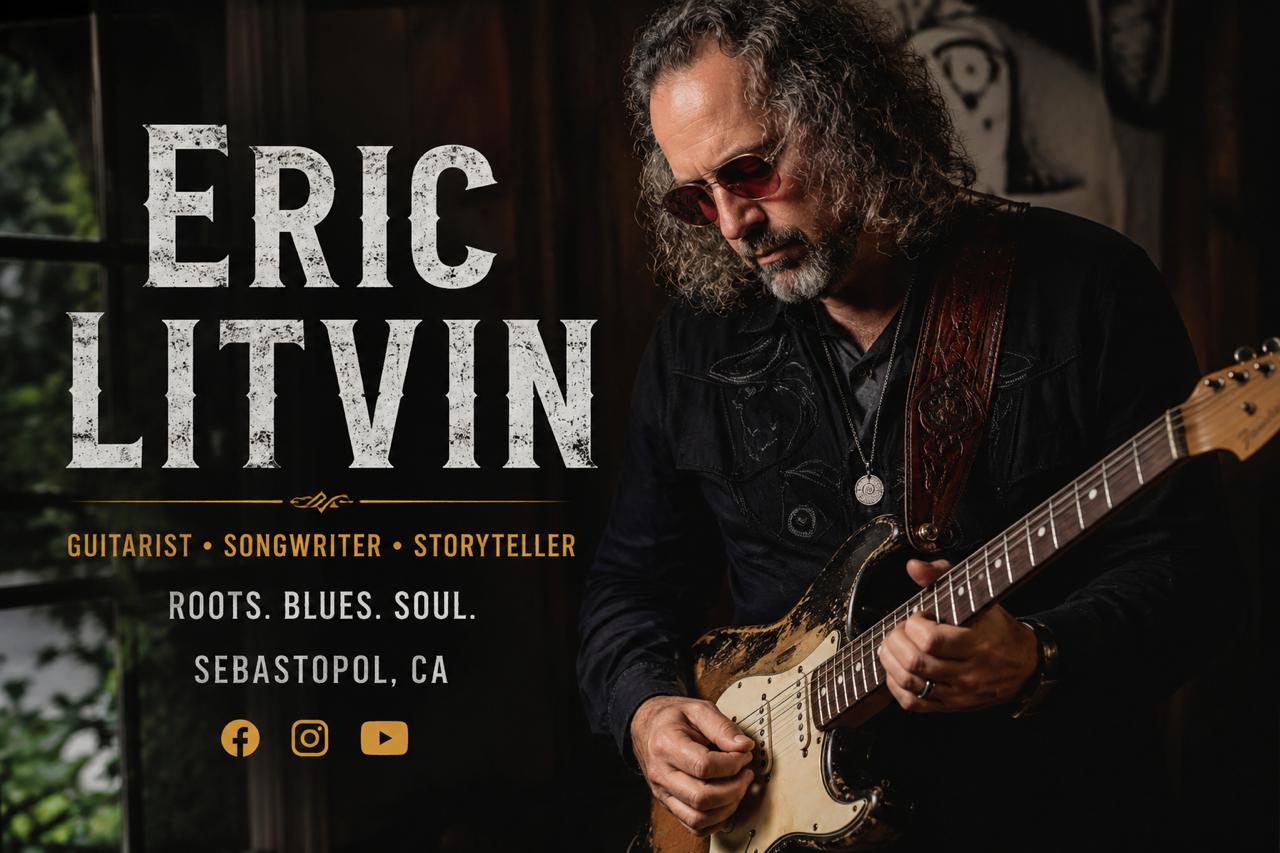
Music has always been more than sound—it’s memory, emotion, and narrative woven into rhythm. In today’s fast-moving industry, where digital production often dominates, artists who still prioritize storytelling through instruments and live performance stand out in a meaningful way. Among those voices is Eric Litvin and the Evolution of Modern Music Storytelling, a phrase that captures a journey shaped by creativity, performance energy, and a deep connection to guitar-driven expression.
Early Musical Foundations
Eric Litvin’s path into music reflects a familiar yet deeply personal story: an early fascination with instruments, hours spent listening to records, and a growing curiosity about how sound can carry emotion. Like many musicians who eventually find their place in live performance circuits, his development wasn’t defined by shortcuts but by steady exploration—learning how melody and rhythm interact to create mood and meaning.
From the beginning, the guitar played a central role. Not just as an instrument, but as a voice capable of expressing what words often cannot. That relationship with the guitar became the backbone of his artistic identity.
Guitar Artistry and Creative Expression
What sets Litvin’s musicianship apart is not technical complexity alone, but intention. Every riff, chord progression, and subtle dynamic shift serves the larger narrative of a song. Rather than treating music as isolated moments of skill, his approach leans toward cohesion—building songs that feel like unfolding stories.
His guitar work often balances precision with emotional looseness, allowing performances to breathe. This blend of control and spontaneity is something that resonates strongly in live environments, where audience energy can shift the direction of a performance in real time.
Nashville Influence and the Live Music Scene
Nashville’s music culture plays an important role in shaping artists who value authenticity and performance craft. The city’s live venues, songwriter circles, and collaborative environment create a space where musicians constantly refine their voice.
Within this ecosystem, performers like Litvin are exposed to a wide range of influences—from traditional country storytelling to rock, blues, and modern fusion styles. The result is a musical vocabulary that is both rooted and adaptable. Nashville’s stage culture, where live performance is often the ultimate test of artistry, encourages musicians to focus on connection rather than perfection.
Performance Style and Audience Connection
Live performance is where Litvin’s musical identity becomes most visible. Rather than simply playing through a setlist, his approach leans into interaction—reading the room, adjusting tone and intensity, and allowing songs to evolve slightly from one night to the next.
This adaptability reflects a deeper understanding of music as a shared experience. The audience is not separate from the performance; they become part of its rhythm. In smaller Nashville venues especially, this exchange creates a kind of musical dialogue that recorded tracks can’t fully replicate.
Storytelling Through Modern Music
Modern music storytelling has shifted significantly over the years. While production tools have expanded possibilities, the core of impactful music still lies in emotional honesty. Artists like Litvin emphasize this balance—using contemporary techniques without losing the human element.
His work highlights how storytelling doesn’t always require lyrics to be direct or narratives to be explicit. Sometimes, it exists in tone, space, and the way a guitar phrase lingers after the last note fades.
Conclusion
At its core, Eric Litvin’s journey reflects a broader truth about modern musicianship: technology may change how music is produced, but the essence of storytelling remains rooted in performance, emotion, and connection. In a place like Nashville, where live music continues to thrive, that tradition is not only preserved but constantly reimagined through artists who see their instruments as voices and their stages as storytelling spaces.
