


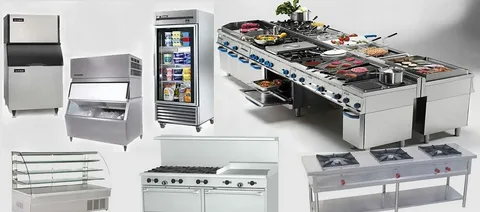
Commercial cooking equipment is the backbone of countless businesses across the United States. From high-volume restaurants to institutional kitchens, professional-grade equipment is essential for preparing food efficiently, safely, and consistently. While most people immediately think of restaurants, many other industries depend on commercial ranges, convection ovens, fryers, steam kettles, refrigeration systems, and food preparation equipment every day.
Here are the five industries that rely most heavily on commercial cooking equipment.
1. Restaurant Industry
The restaurant industry is by far the largest user of commercial cooking equipment. Whether it’s a neighborhood diner, fine dining establishment, fast-food restaurant, hotel kitchen, brewery, ghost kitchen, or multi-unit franchise, every operation depends on specialized equipment to produce high-quality meals while maintaining speed and consistency.
A typical commercial kitchen may include gas ranges, convection ovens, combi ovens, charbroilers, deep fryers, griddles, refrigerated prep tables, reach-in coolers, walk-in freezers, mixers, slicers, dishwashing systems, exhaust hoods, and fire suppression systems.
Because these assets often represent hundreds of thousands of dollars in capital investment, many owners require independent restaurant equipment appraisals for financing, SBA loans, insurance claims, business sales, lease negotiations, estate planning, litigation, charitable donations, or bankruptcy proceedings. An objective appraisal provides lenders, buyers, and business owners with a well-supported opinion of value while helping guide important financial decisions throughout the equipment’s lifecycle.
2. Hospitals and Healthcare Facilities
Hospitals operate some of the largest commercial kitchens in the country. Preparing thousands of meals each day requires industrial cooking equipment capable of meeting strict sanitation standards while maintaining consistent food quality.
Healthcare kitchens often utilize steam-jacketed kettles, tilt skillets, conveyor dishwashers, blast chillers, heated holding cabinets, and specialized food transport systems designed to serve patients, staff, and visitors around the clock.
As healthcare systems continue to expand, many organizations are investing in modern kitchen technology that improves efficiency while reducing labor and energy costs.
3. Schools and Universities
Educational institutions serve millions of meals each day through cafeterias, dining halls, and campus food service operations. From elementary schools to large universities, these facilities require durable commercial equipment capable of handling peak meal periods efficiently.
School kitchens commonly include combination ovens, convection ovens, warming cabinets, walk-in refrigeration, serving lines, and high-capacity dishwashing equipment designed for continuous daily operation.
Many districts periodically renovate their kitchens to improve food quality while meeting updated nutritional and safety standards.
4. Hotels, Resorts, and Convention Centers
Hospitality facilities often operate multiple kitchens within a single property. Restaurants, banquet halls, room service, coffee shops, bars, and catering operations each require their own specialized cooking equipment.
Large hotels may prepare thousands of meals during conferences, weddings, and conventions. Their kitchens frequently feature high-capacity cooking suites, bakery equipment, refrigeration systems, ice machines, and custom stainless-steel fabrication designed to maximize workflow.
Reliable equipment is critical because even a single equipment failure can disrupt large-scale events and negatively impact guest satisfaction.
5. Correctional Facilities and Government Institutions
Correctional institutions, military bases, and government facilities operate some of the highest-volume commercial kitchens in the country. These operations prepare meals for hundreds or even thousands of people every day using equipment specifically engineered for durability and continuous operation.
Industrial kettles, conveyor ovens, pressure steamers, bulk food preparation systems, and heavy-duty warewashing equipment allow these facilities to produce large quantities of food while maintaining food safety standards and controlling operating costs.
Because many government kitchens operate under tight budgets, equipment maintenance and lifecycle planning play a significant role in long-term capital management.
Commercial Kitchens Drive Business Success
Although restaurants remain the largest users of commercial cooking equipment, healthcare providers, educational institutions, hospitality organizations, and government facilities all depend on reliable commercial kitchens to serve their communities every day.
These specialized assets represent significant financial investments and often remain in service for many years with proper maintenance. Whether expanding operations, replacing aging equipment, obtaining financing, or planning a business transition, understanding the value and condition of commercial cooking equipment helps organizations make informed financial decisions while maximizing the return on their investment.
